Alone through Syria: eleven days between Damascus, Palmyra and Aleppo
Eleven days alone through Syria: Milan travels via Damascus, Palmyra and Homs to Hama and Aleppo and tells of special encounters and spontaneous detours.
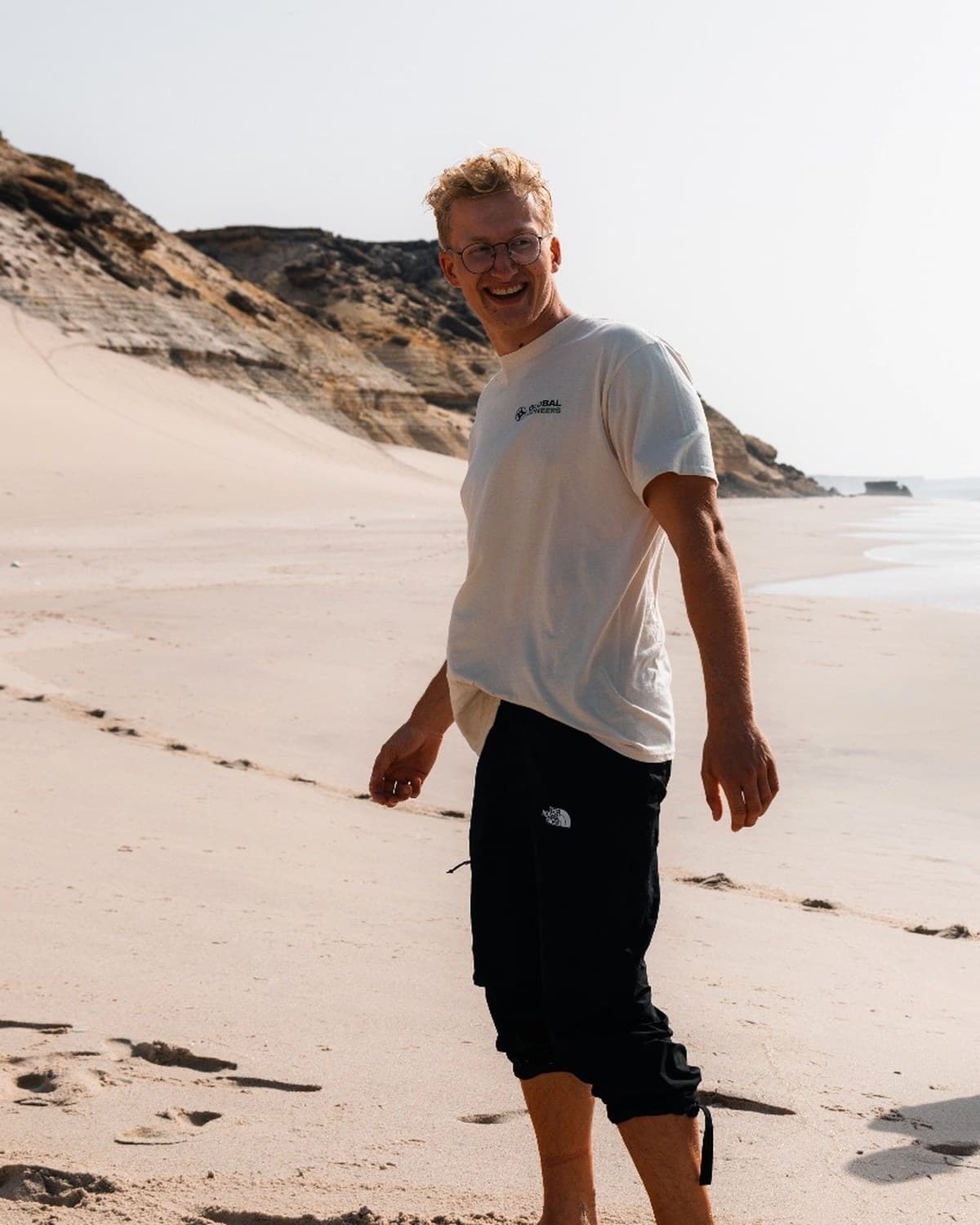
Milan
Guide & Expedition Planning
In December 2025 I traveled overland from Amman into Syria. I spent eleven days on my own, from Damascus via Palmyra and Homs to Hama and Aleppo. I wanted to experience the country for myself, talk to people and find out whether a trip like this was even possible at that point in time.
Thanks to my travels in Iraq and our Kurdistan Expedition, I already knew the region. Syria was still something else entirely. A lot worked, some things felt improvised, and a few situations were almost impossible to judge in advance. That mix shaped my whole trip.
From Amman across the border to Damascus
My journey to Syria began with a flight to Amman. From there I continued to the Jordanian-Syrian border. The border crossing itself was one of those moments when I immediately noticed how little was running smoothly yet. A printed A4 sheet with the word “Visa” hung on a wall. That was essentially the only clearly visible information about the entry procedure.
Registration didn't seem fully organized yet either. A lot appeared to be still taking shape. Entry worked for me that day, but it was obvious that I couldn't rely on clearly defined procedures. There was a way through, but nobody could have guaranteed me that it would still work the same way the next day.
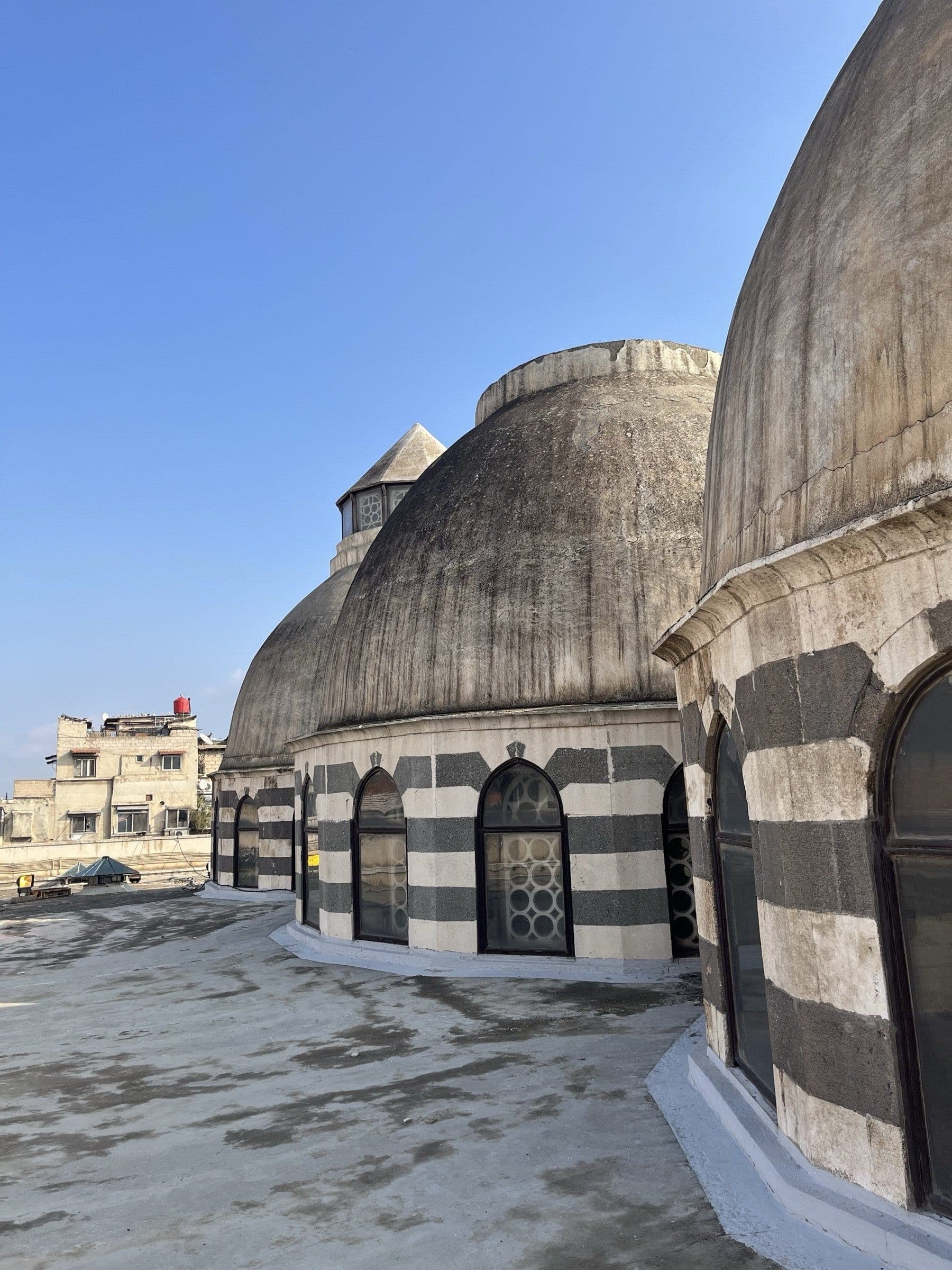
From the border I continued to Damascus. There I quickly got to know a lot of people. Some spoke surprisingly good German, others wanted to know where I was from and why I was traveling through Syria alone. Conversations often started spontaneously, for example when walking into a shop or during a visit to the barber.
On the street I hardly stood out at first. It was December, I wore long clothes and usually a beanie. Only when I spoke to someone did it become clear that I wasn't from Syria. Often that was exactly the moment a conversation began. Some people had lived in Germany themselves, others had relatives or friends there. As a result, I spoke German far more often on my trip through Syria than I had expected.
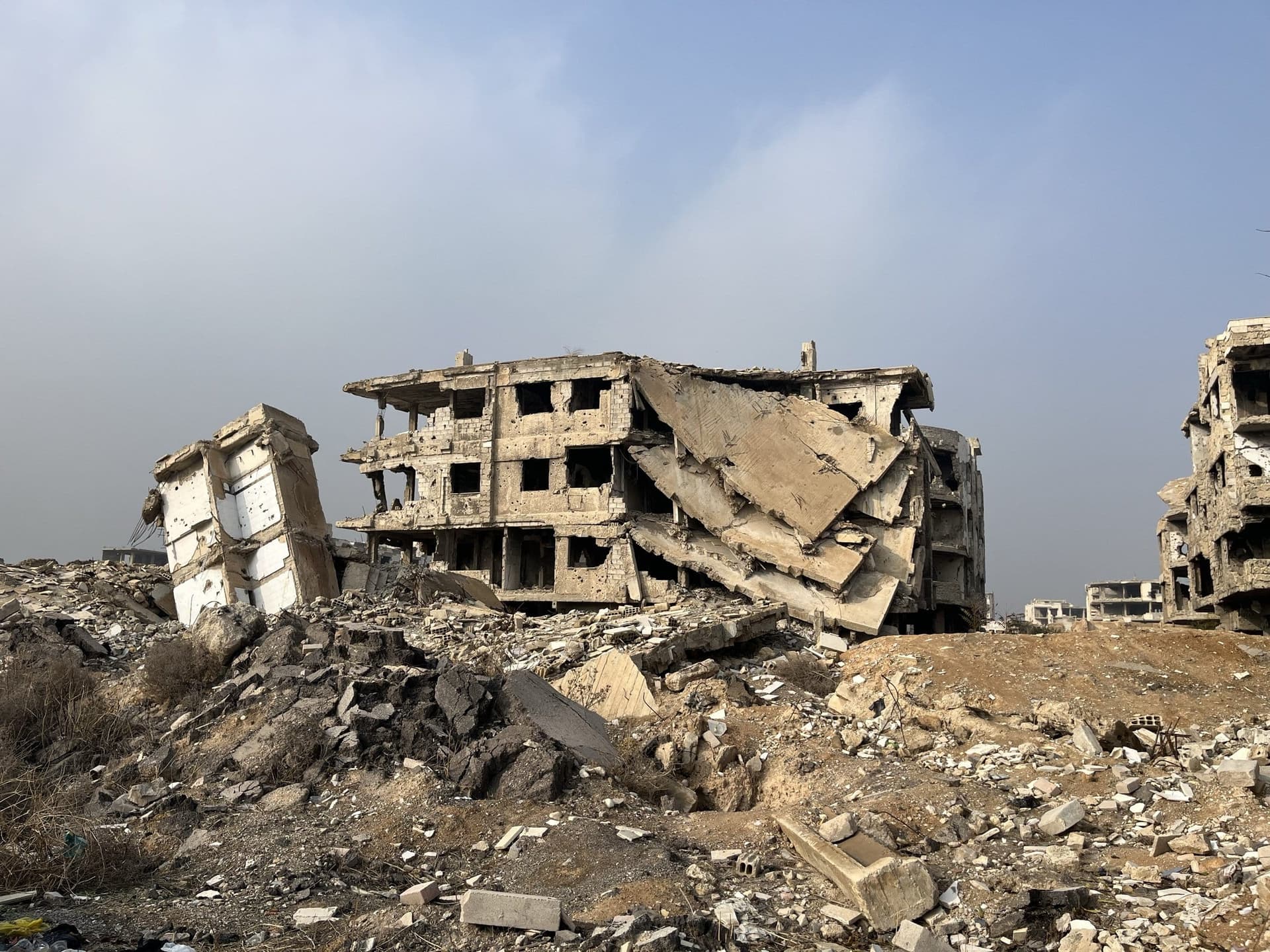
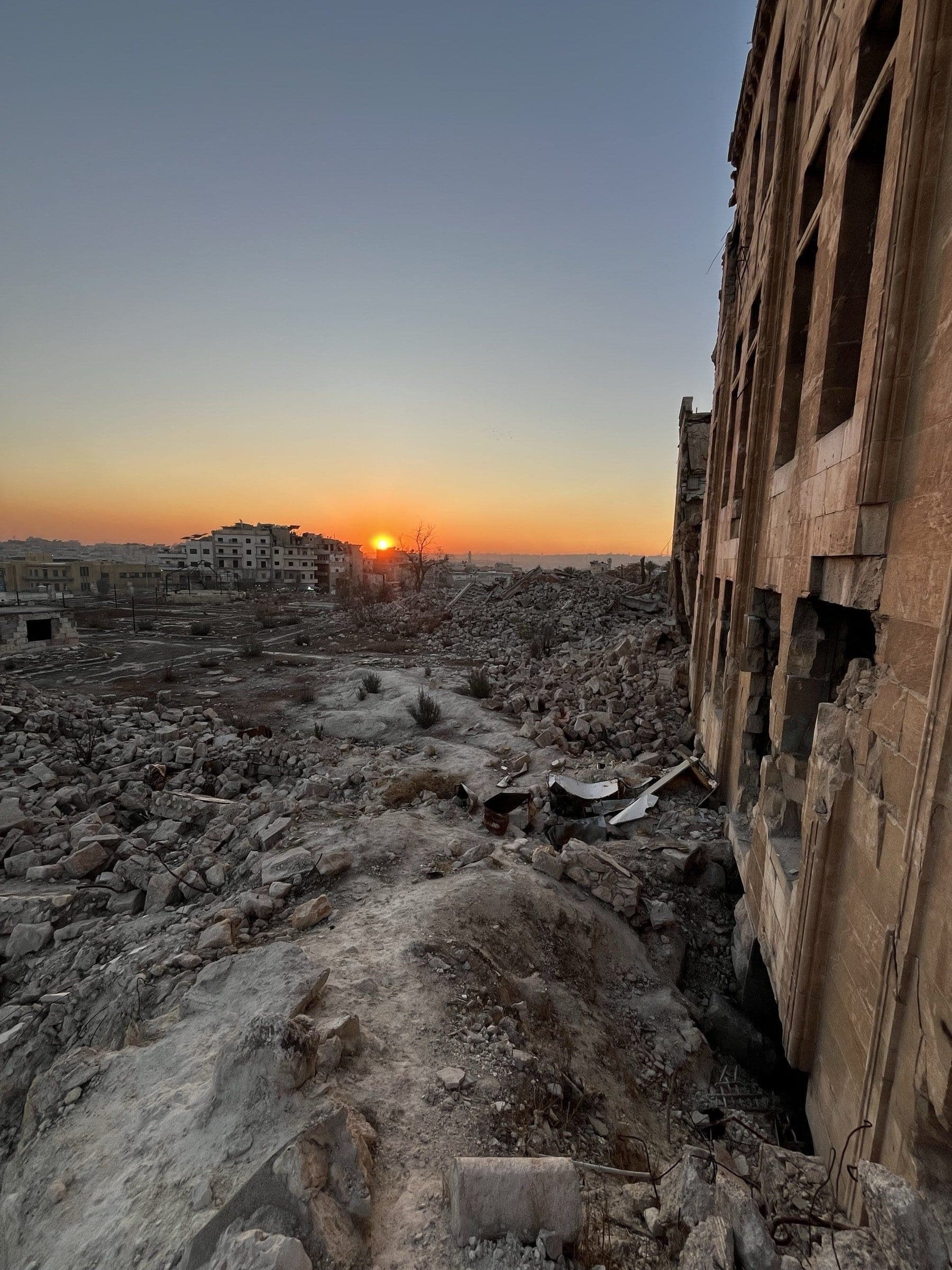
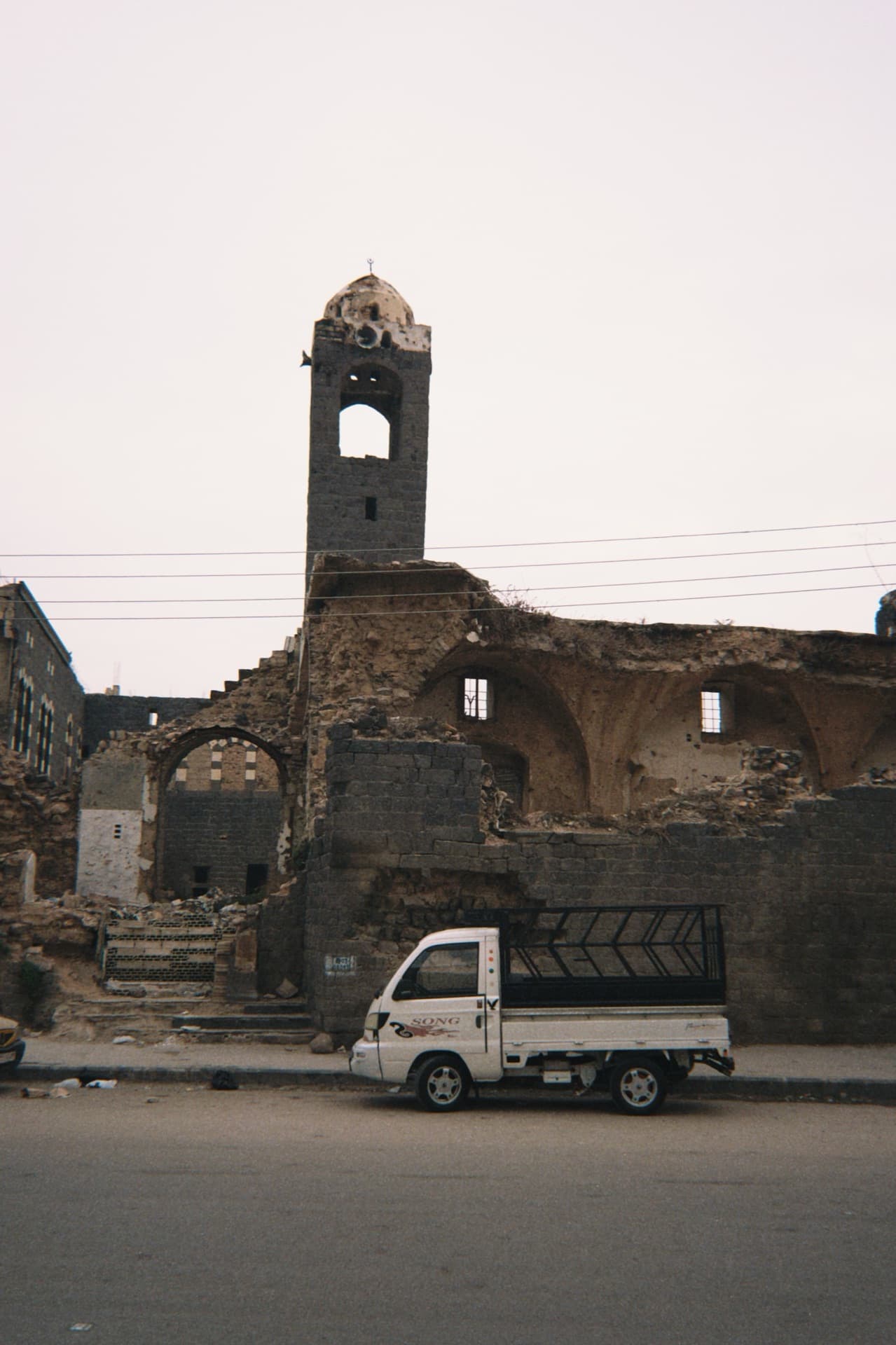
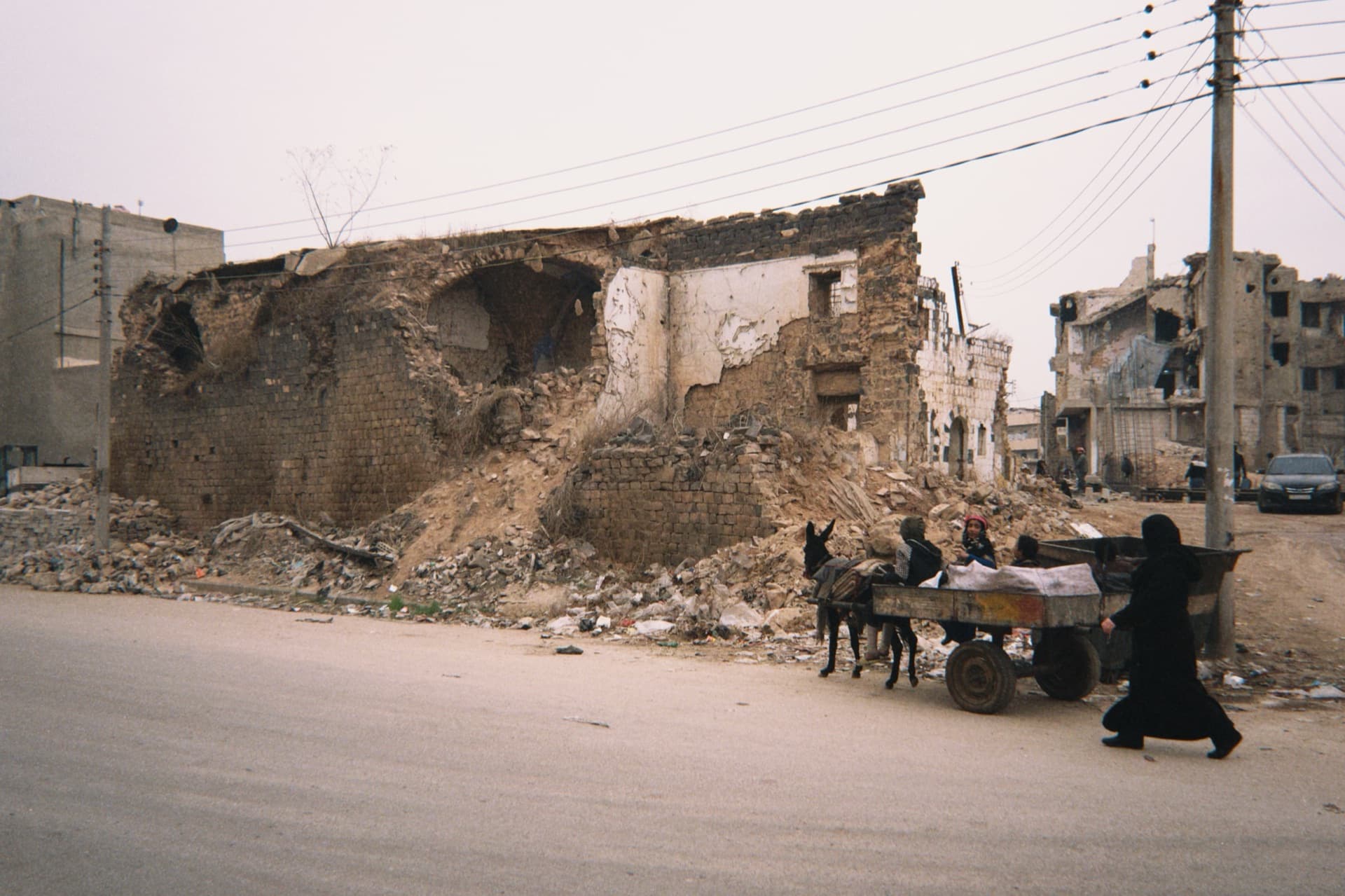
Alongside these everyday encounters, the consequences of the war were impossible to overlook. This became especially clear in the Jobar district. Large parts of the neighborhood were destroyed. Some buildings were badly damaged, of others only fragments were left standing. Walking between these ruins was something completely different from seeing such images on a screen.
At the same time, daily life went on in other parts of Damascus. People opened their shops, went to work, got their hair cut and took time for a conversation with a stranger. This quick switch between massive destruction and seemingly ordinary everyday life stayed with me through almost the entire country.
Logistically, too, the trip remained difficult. The internet often worked poorly, and getting a Syrian SIM card was more complicated than expected. So I couldn't count on finding accommodation, a connection or the next ride online at any time. A lot had to be sorted out directly on the spot. Over the entire eleven days I also met only very few other foreign travelers.
Alone in Palmyra and special encounters in Homs
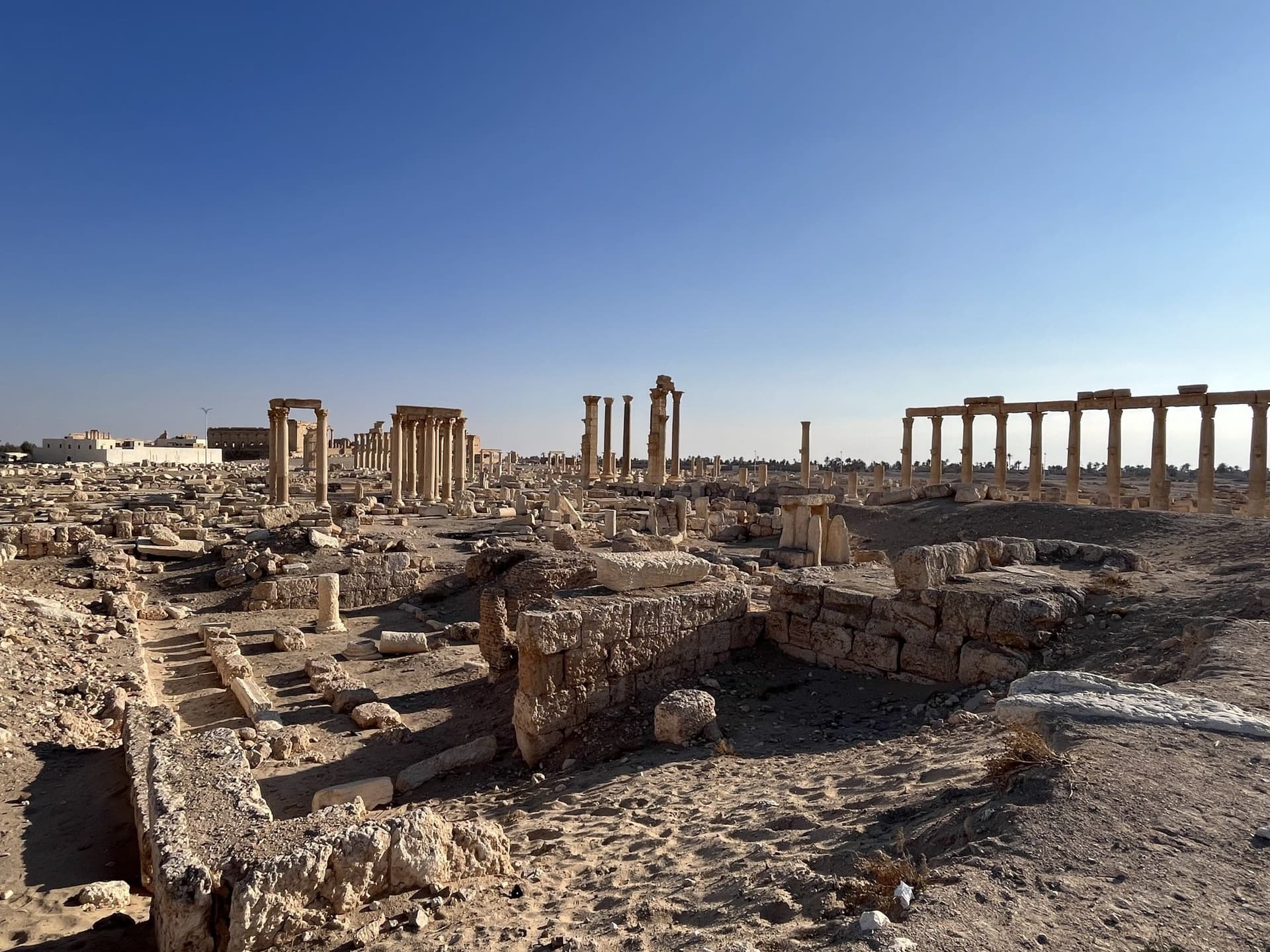
From Damascus I traveled on to Palmyra. This visit became the most surreal moment of my trip.
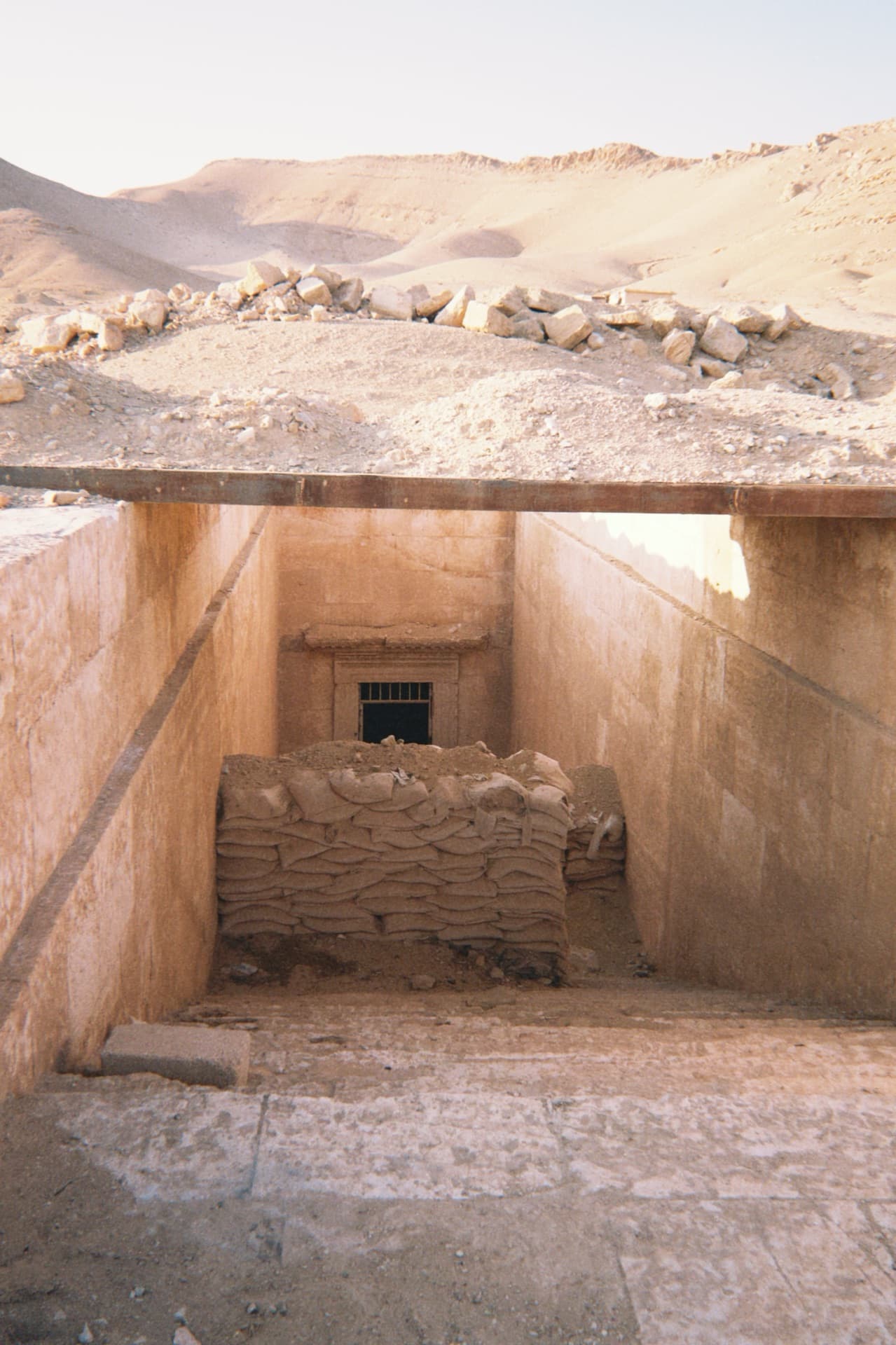
Only a few days earlier there had been a deadly attack near Palmyra. When I reached the ancient ruined city, I didn't see a single other visitor. I stood alone among the columns and remains of a city that had once been one of the most important centers of the region.
It was cold. Single rays of sunlight fell between the ruins, and I walked through the site in a sweater. On top of that I had a slight cold for almost the entire trip. Still, I had been really looking forward to Palmyra.
The mix of anticipation, cold, complete emptiness and the recent attack made the situation hard to grasp. It didn't feel like visiting an ordinary sight. The place was too quiet and the whole situation too unusual for that. I hadn't deliberately set out to have Palmyra to myself. But that day I really was the only visitor I saw there.
From Palmyra I continued to Homs. There I met people with very different life stories, including journalists. Many conversations quickly went beyond the usual small talk. People told me about their daily lives, their families and the expectations they lived with in their communities.
One man stayed with me in particular. He told me that he was an atheist. Only his closest friends knew. He couldn't be open about it with his family. During Ramadan he had to give the outward impression of following the religious rules.
I spent some time with him and learned that he was involved in helping orphans and street dogs. That is exactly what made the encounter so special for me. Within his family he couldn't show an important part of his own convictions. At the same time, he put a lot of energy into supporting people and animals who needed help.
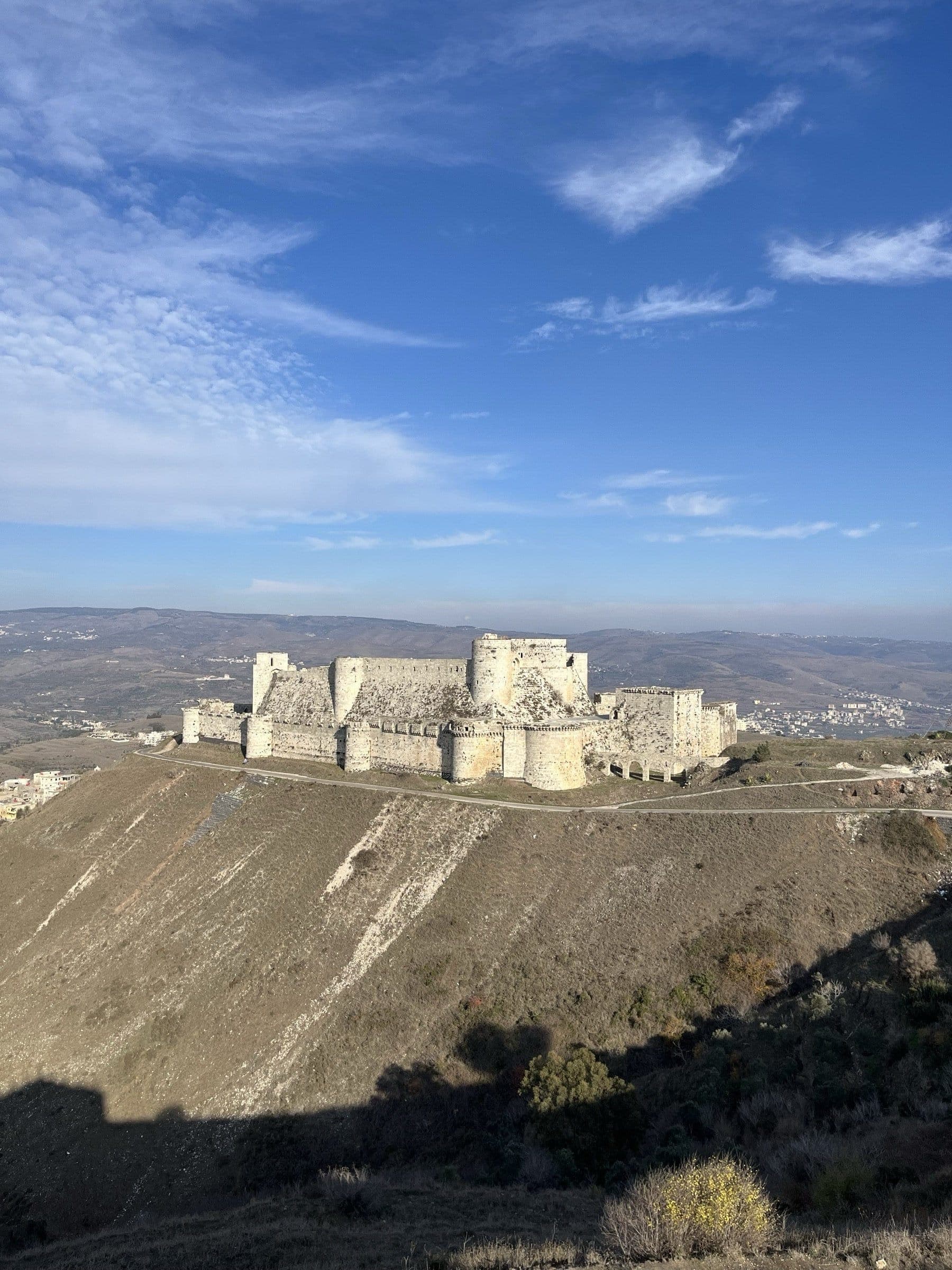
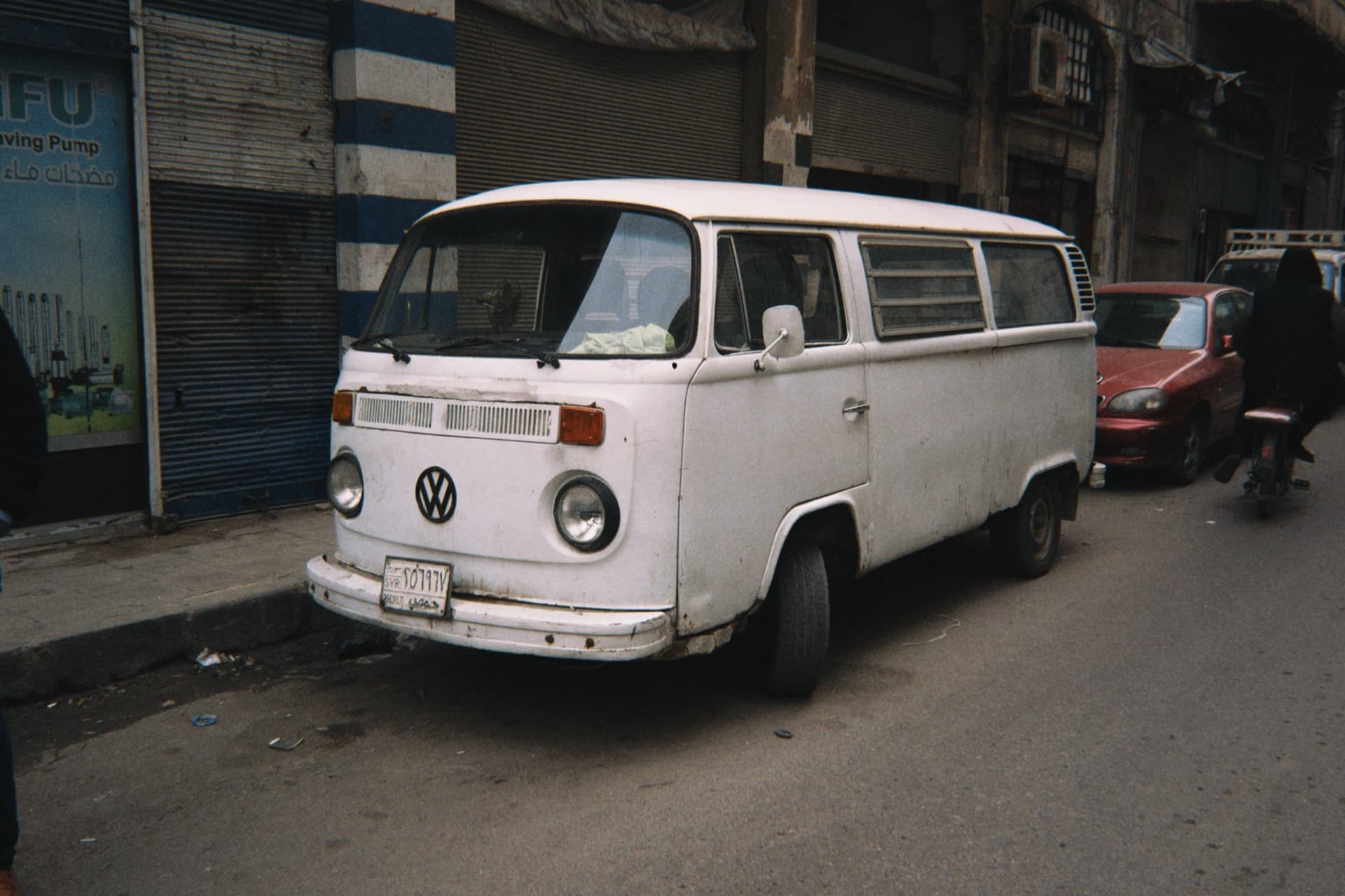
From Homs I also wanted to visit the crusader castle Krak des Chevaliers. For the way there I took a shared minivan. Shared taxis like this were one of the most practical ways to travel between cities and smaller towns.
I wanted to hitchhike back to Homs. A taxi driver first tried to win me over as a passenger after all, but I stuck to my plan. Eventually a Syrian stopped who worked internationally and spoke very good English.
A simple ride turned into one of the most personal encounters of my trip. He invited me to his home, and I spent the night with him and his family. That same morning I hadn't known how I would get back from the castle. A few hours later I was sitting with people I had never met before and was welcomed as a guest as a matter of course.
Situations like these stayed with me more than many of the sights. They didn't come from a planned tour or a booked activity, but simply from being on the road and being open to an encounter.
Via Hama to Aleppo and an unplanned journey home
After Homs my route continued to Hama. The city seemed much less destroyed to me than Jobar and some of the other places I had seen before. Hama was a beautiful and comparatively calm stop. After the intense impressions of the previous days, the city almost felt like a short break.
The last major stop of my trip was Aleppo. There I met the younger brother of friends and acquaintances. Together we explored different parts of the city.
In Aleppo, too, everyday life and destruction lay right next to each other. In some areas I moved around fairly relaxed. In others I felt less safe and was considerably more careful. I never felt in immediate danger all the time. Still, you could sense that not every part of the city could be judged the same way.
I walked through destroyed neighborhoods, but I also saw open shops, restaurants and people going about their daily lives. I ate very well, had lots of conversations and once again met people who took time for me. Often a few sentences were enough for a chance encounter to turn into a longer conversation.
Even my journey home didn't go as planned in the end. My flight was canceled and I had to change plans at short notice. In that situation I met a German-Syrian who lives in Germany. We spent an extra night in a hotel together. The next day we were finally able to fly back via Istanbul.
This unplanned ending fit the previous eleven days. Hardly anything was entirely predictable. At the same time, almost every change of plan led to a new encounter.
That's why it isn't only the well-known places that have stayed with me from my trip to Syria. I remember the A4 sheet at the border, the destroyed houses of Jobar, the complete silence in Palmyra, the conversation with the atheist in Homs, the shared minivan to the crusader castle and the spontaneous night with a family I hadn't known a few hours earlier.
I saw massive destruction and experienced areas where I felt unsafe. At the same time, I met open, helpful and curious people. Both were part of this trip, and neither on its own would be a complete description of what I experienced.
My trip took place in a specific window in December 2025. The fact that it was feasible for me back then doesn't mean the same route would be possible today under comparable conditions. The situation and entry requirements can change at short notice.
Safety note: The German Federal Foreign Office warns against travel to Syria. This personal travel report describes my experiences in December 2025 and is not a recommendation to repeat the trip.
Sounds like your kind of adventure?
This expedition could be your next step. Or explore all of our adventures.