Traveling to Svalbard: by snowmobile between an ice cave and a Soviet ghost town
Preparation is everything: between a whiteout, a forgotten ice cave and the Russian settlement of Barentsburg, because the ice to Pyramiden wouldn't hold.

Jan
Guide & Bookings
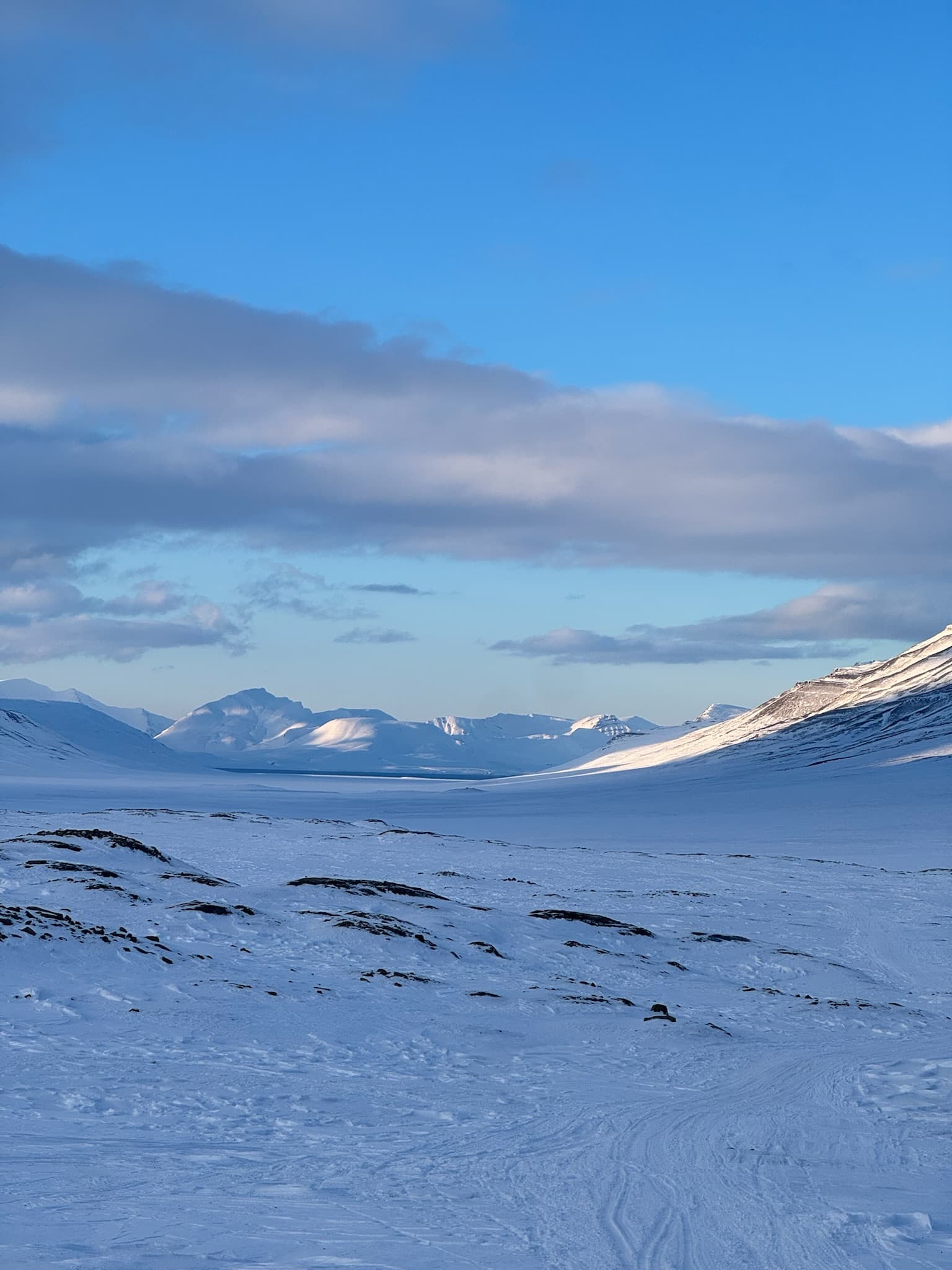
A close friend spent several months at the University Centre in Longyearbyen, known as UNIS. Visiting him was the reason for this trip. In March 2026 I flew to Svalbard via Oslo. Svalbard isn't a destination you book on a whim: the only way in is by plane, and there are roads only in and around the settlements, not between them. Having someone on the ground was what made the trip possible at all, because in winter you only really get out of Longyearbyen with the right gear, polar bear precautions and local knowledge.
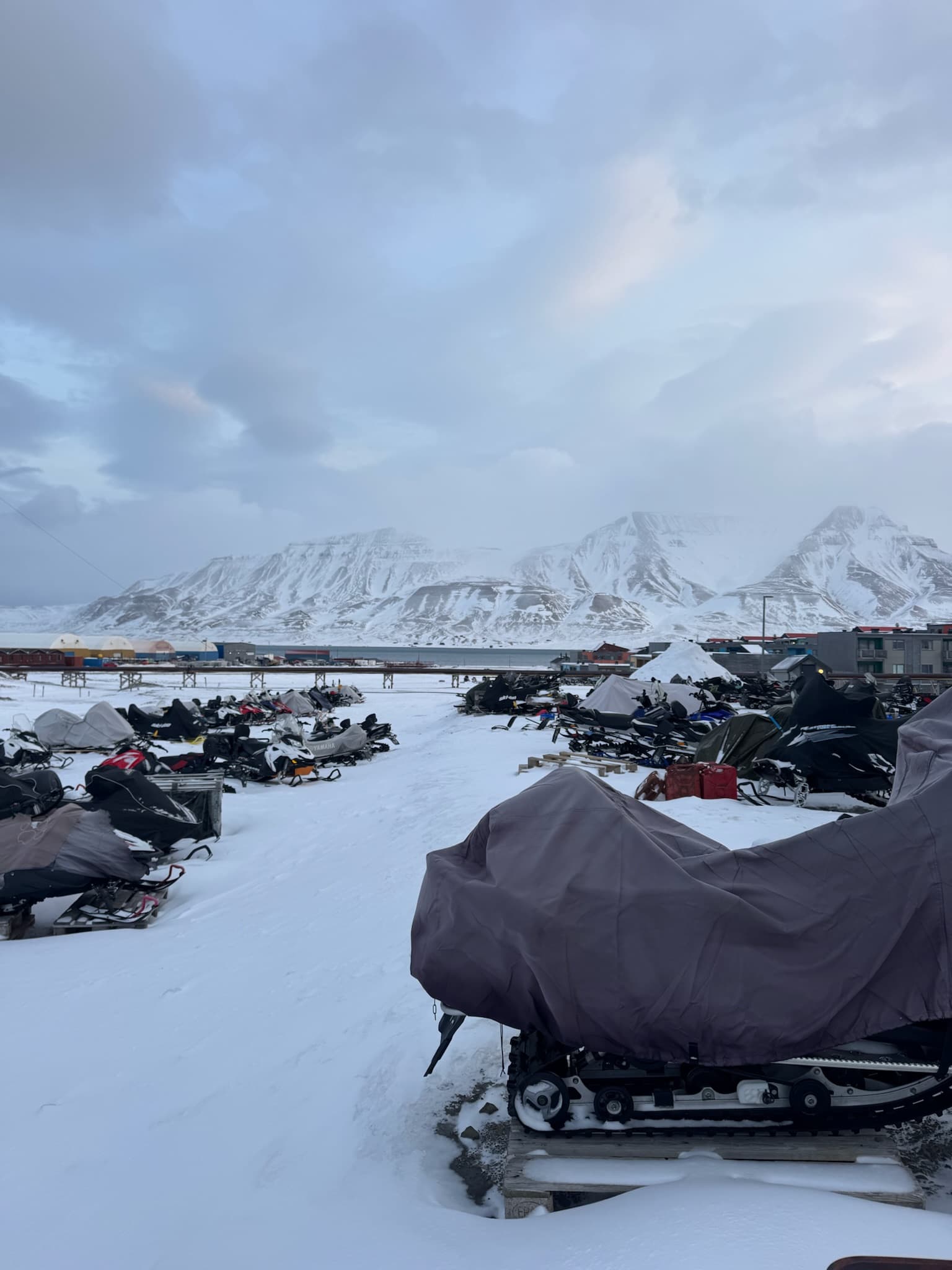
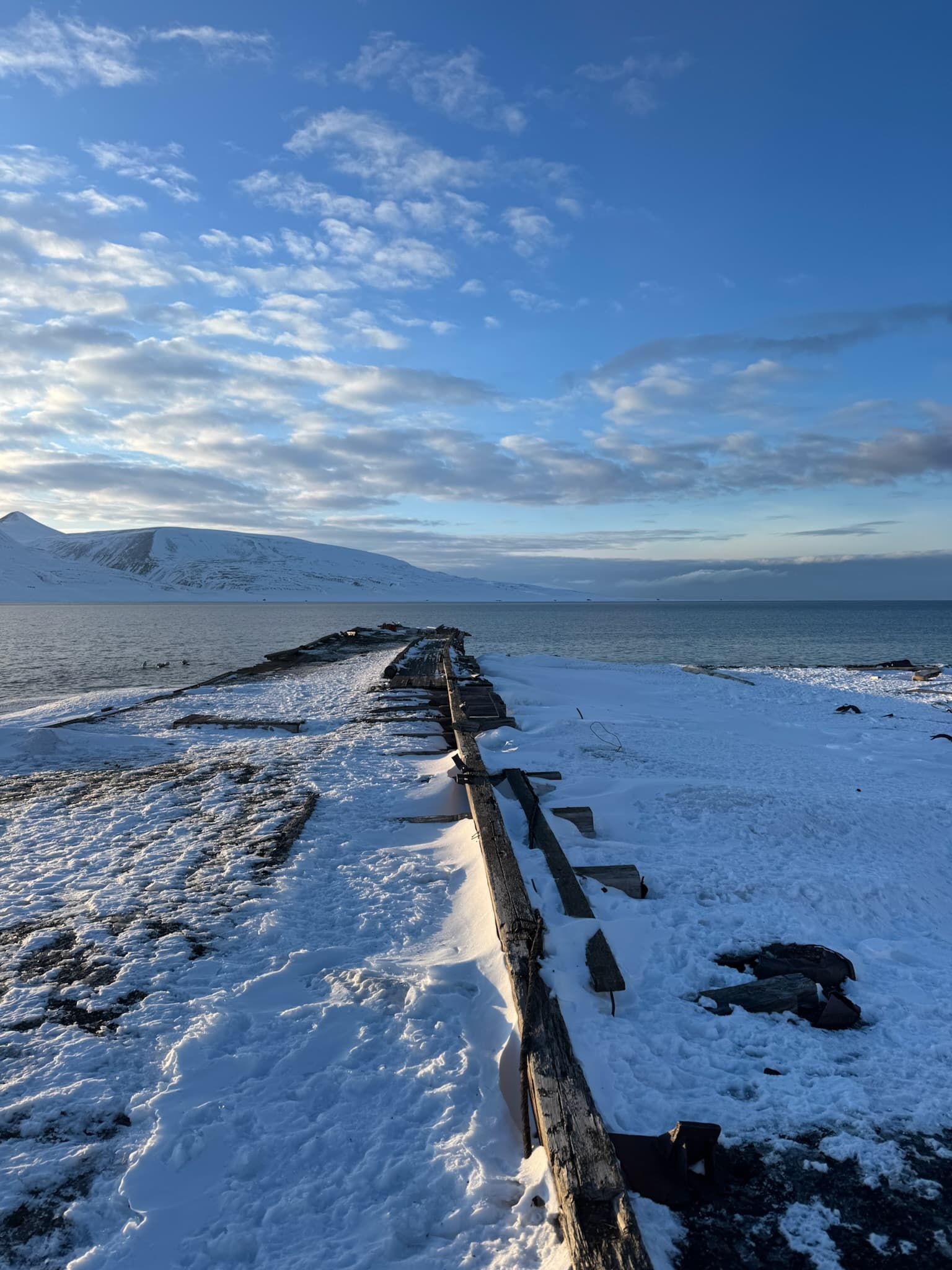
On the first afternoon I unpacked and then walked down to Adventfjorden. The mountains around town lie completely under snow. There's hardly any bus service, but surprisingly many cars for such a remote place. Where the road ends, you switch to a snowmobile in winter, and even students own one. Down by the water, the remains of an old loading pier from the mining days still stick out of the ice. Longyearbyen exists because of coal: founded in 1906 by the American John Munro Longyear with his Arctic Coal Company, sold to a Norwegian company ten years later. The old mining structures are still standing, because on Svalbard anything built before 1946 is automatically a protected heritage site. Today the town lives largely off science: the university centre has existed since 1993, and for a place with around 2,500 residents it is very large.
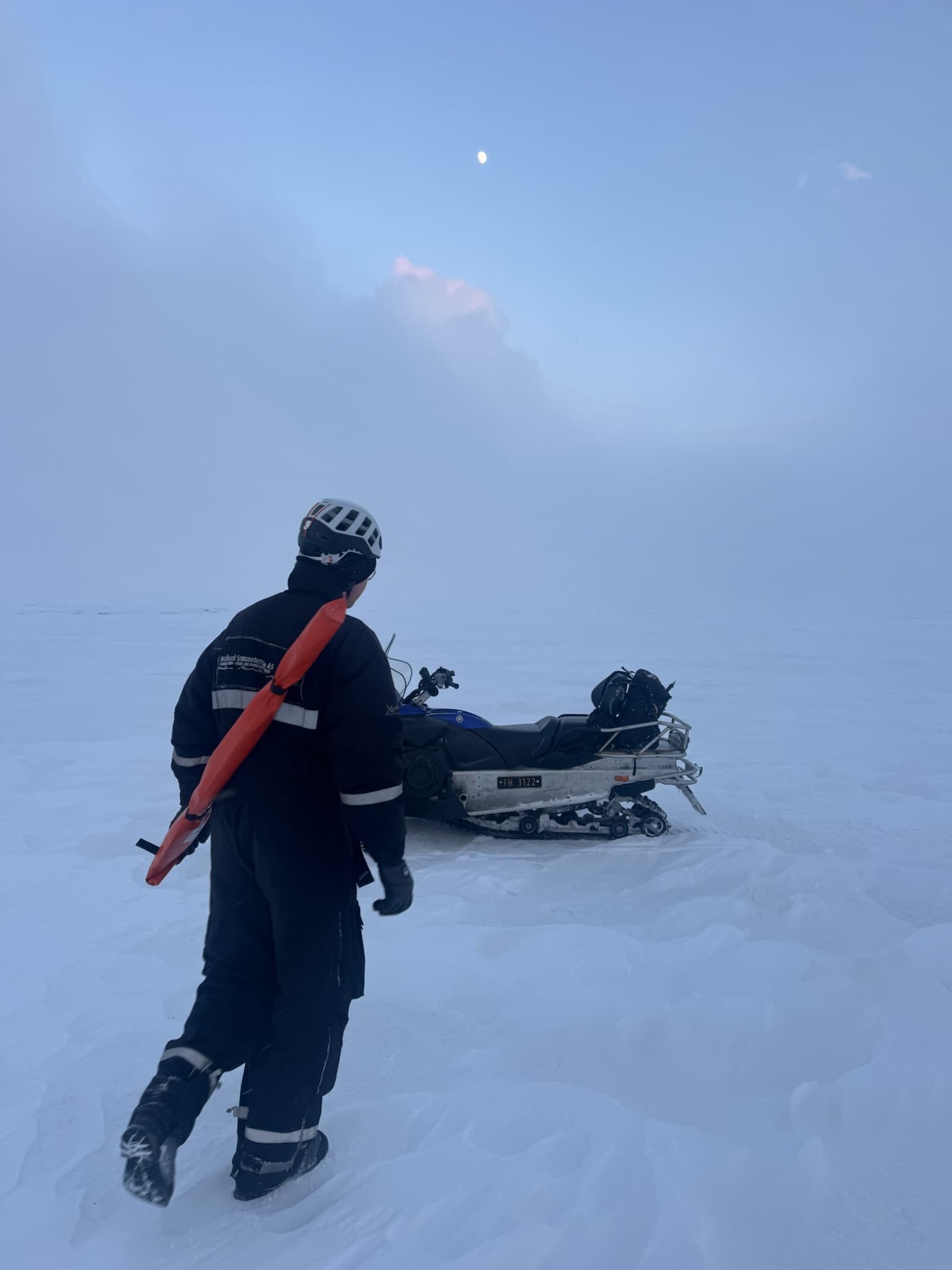
Before every ride the snowmobile suit gets adjusted, with one clear rule: no exposed skin, not at the wrist, not between balaclava and goggles. We also go through weather charts and routes. As soon as you leave the settlement, a rifle comes along because of the polar bears, the strictly protected animals that are the true rulers of Svalbard. If a bear is shot, the Sysselmester, Norway's governor for the archipelago, investigates the case. There is a fixed sequence for an emergency: first the flare cartridge, loud enough to scare a bear off, the rifle is the last resort.
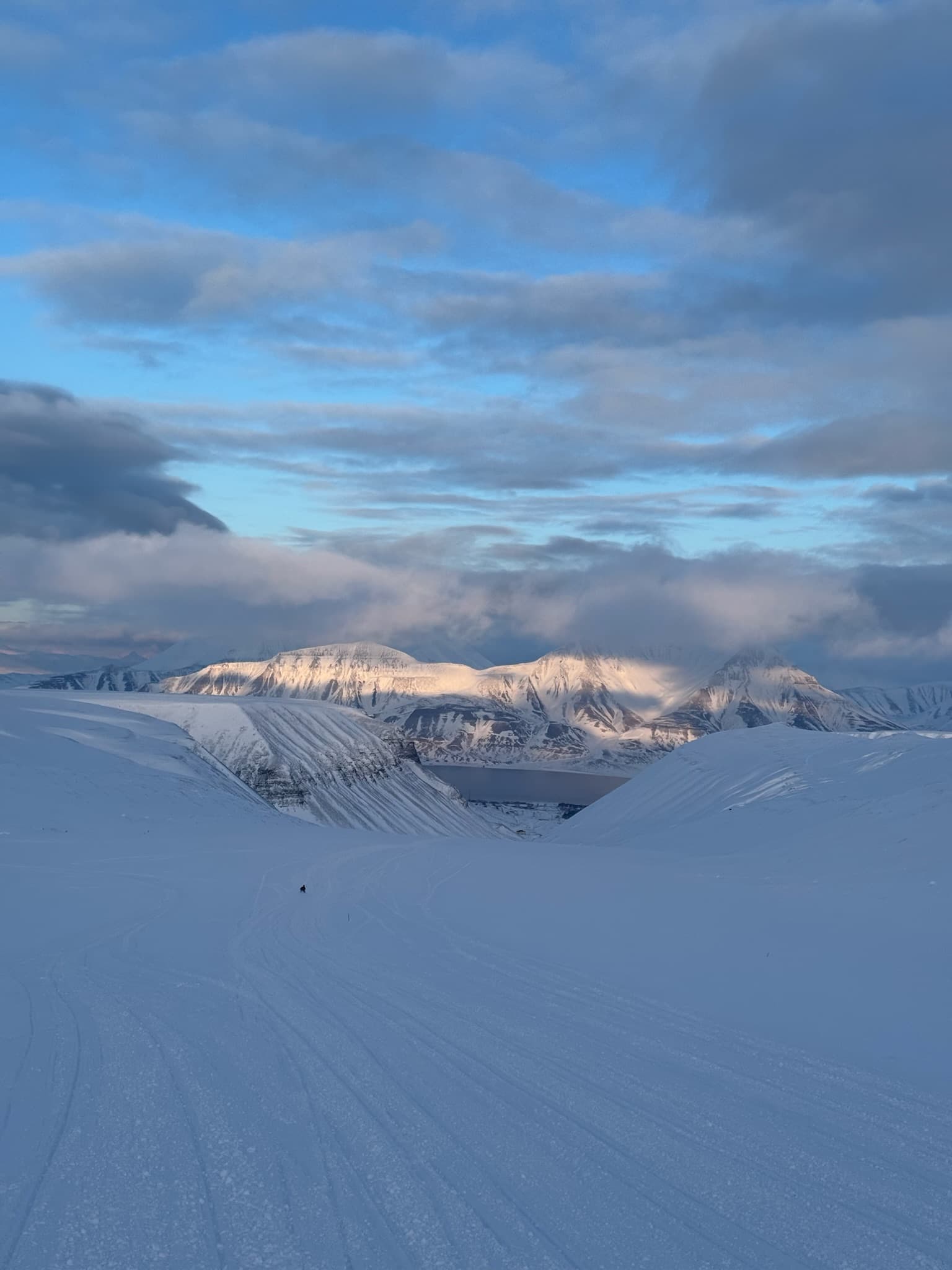
On the very first outing we drove straight into a complete whiteout. Shadows and contrast disappear, snow and sky become indistinguishable, there was no horizon at all. After that came long rides over many kilometers: deep snow, frozen water, frozen waterfalls, glaciers, stretches of ice with water flowing beneath it. One destination was an ice cave, usually a meltwater channel inside the glacier that carries water in summer and is only passable in winter. At the cave we drove to, the entrance was completely snowed in, a wall of snow around five meters high that has to be dug out again and again. We had the cave to ourselves; some people string up hammocks in there and spend the night.
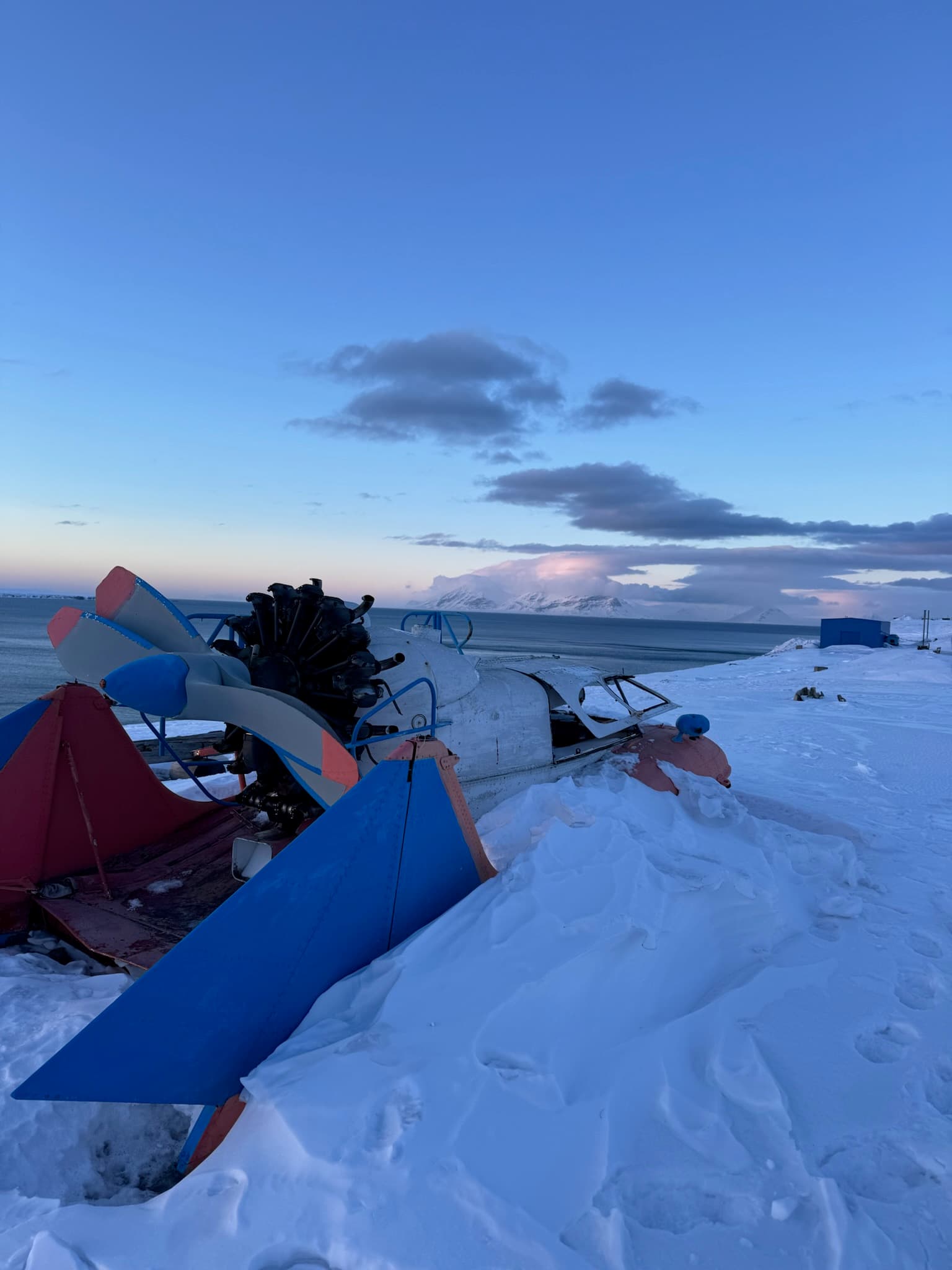
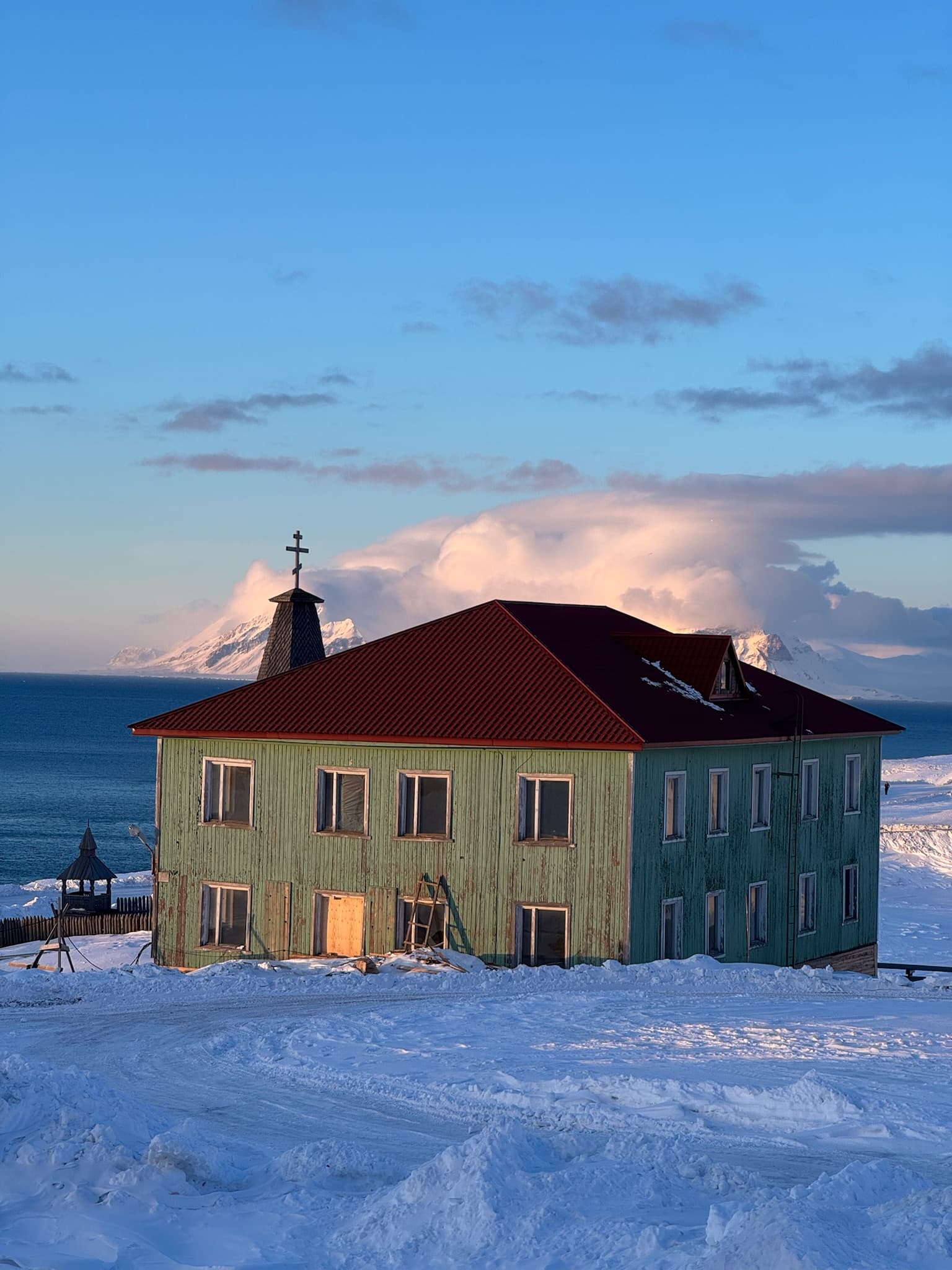
One ride was supposed to go to Pyramiden, named after a pyramid-shaped mountain nearby. The mining settlement was founded by Swedes, passed to the Soviet Union in 1927, and was abandoned in 1998, standing largely empty ever since. We never arrived: the ice wasn't thick enough, and the route would have crossed the glacier. We turned back that evening. Instead we drove to Barentsburg, the inhabited Russian settlement. The place is named after the Dutch navigator Willem Barentsz, who reached Svalbard in 1596; it was founded by a Dutch company that sold it to the Soviet Union in 1932. The reason a Russian settlement sits on Norwegian territory today goes back to the Svalbard Treaty of 1920: Norway holds sovereignty, but the treaty's signatory states may still do business on Svalbard. Coal has been mined there for decades, and according to people on the ground it hasn't been profitable for a long time. I understand the reason people stay as strategic presence: once you leave, it's hard to come back to Svalbard. The place is tight, there's one pub, and beyond that everyone has their own thing.
At the end of the tour, the remaining cartridges were fired off under controlled conditions, one last formality before heading home. Between a whiteout, an ice cave and a ghost town we never even reached, I saw a side of the world hardly any traveler gets to see. Svalbard in winter isn't a destination for in between, it's a region that stays closed off without preparation and local knowledge.
Sounds like your kind of adventure?
This expedition could be your next step. Or explore all of our adventures.